
Salt works for your factory.
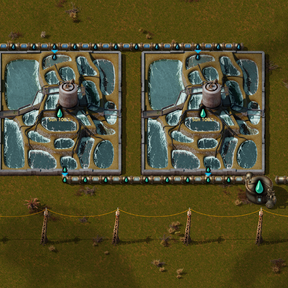
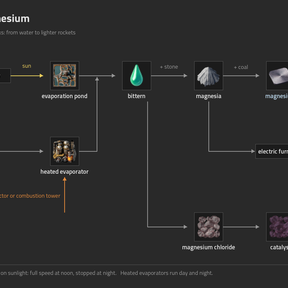
Magnesium starts with water. Lay out evaporation ponds, pipe in water and let the sun do the work: out comes bittern, a magnesium-rich brine, and your chemical plants turn it into magnesia and the light metal that robots, rockets and space platforms are made of.
The catch is the sun. Ponds run at full speed at noon, slow down at dusk and stop at night. A salt works that feeds your factory around the clock needs tanks to get through the dark, or more land, or heated evaporators that run on heat pipes day and night on a fraction of the space. And since low density structures, robot frames and electric furnaces all need magnesium, every rocket you launch grows the pond field.
No magnesium ore patches. Start with water; Space Age adds lava and asteroid routes.
Factorio 2.1.23 or later. Works on its own, and fits into Space Age, Space Exploration, Krastorio 2, the BZ mods and the Timeken, Ashier and trikop metal mods, all optional.
What it adds
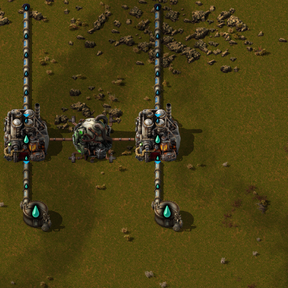
- Evaporation ponds (12×12, no power, no steel): water → bittern. Speed follows the sun. Alt-mode shows each pond's sunlight.
- Magnesia (bittern + stone), magnesium (magnesia + coal) and magnesium chloride (bittern), in chemical plants.
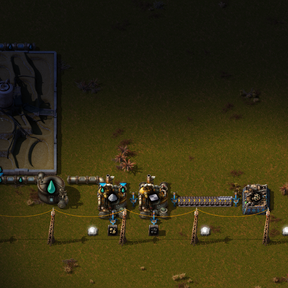
- Heated evaporators (5×5, after Nuclear power, or after Phosphorus processing with Phosphorus): the same recipe on heat-pipe heat, day and night, as fast as about two and a half ponds.
- Required early uses: ordinary plastic needs magnesium chloride catalyst support; tier-one speed, efficiency, productivity and quality modules need one magnesium each for their housings.
- Equipment housings: night vision and belt-immunity equipment each replace two steel with two magnesium, keeping their existing research tier and effects.
- Nuclear fuel cladding: ten uranium fuel cells use five iron and five magnesium, alongside the usual one uranium-235 and nineteen uranium-238. Fuel value and uranium consumption stay the same. BZ Zirconium's casing and early-start recipes retain their existing bills.
- Exoskeleton frames: ten steel and five magnesium replace twenty steel at the existing blue-science unlock. Packs already using carbon fiber, titanium or other lightweight frames retain them; K2's smaller frame uses five steel and three magnesium.
- Flamethrower hardware: handheld flamethrowers replace two steel with two magnesium and need one magnesia for heat insulation; turrets need five magnesia. Their research requires Magnesium processing at the same science tier. Ammo, turret fuels and combat effects stay unchanged.
- Polymerisation catalyst: catalysed plastic makes a third more plastic from the same ingredients. The catalyst comes back 98% of the time.
- Ductile iron pipe (a fifth more pipe from the same iron) and Sorel concrete (raw stone aggregate with magnesia binder: 20 stone per 20 concrete in the standard recipe, without firing bricks).
- Magnesium-treated engines: an optional route using magnesium and 20% fewer ordinary components, at the same crafting time per engine. Unlocks with Magnesium processing in vanilla; keeps the normal engine recipe.
Magnesium is needed for low density structures (half their copper becomes magnesium), flying robot frames and electric furnaces (magnesia refractory). Utility science and rockets therefore need a growing salt works: about six ponds per utility science pack per second.
Space Age
Each early planet can supply magnesium locally:
- Vulcanus: foundries make magnesia from lava and calcite without water, then reduce it with coal or carbon. Ponds remain available at 400% noon speed using condensed steam.
- Fulgora: scrap ice supplies pond water; electromagnetic plants electrolyse magnesium chloride without coal. Magnesium also makes 25% more holmium per solution, returning chloride in 90% of batches.
- Gleba: spoilage carbon replaces coal synthesis in magnesium reduction. Magnesium chloride makes 25% more bioflux in the biochamber.
- Space platforms: Asteroid magnesia research unlocks oxide crushing for three ice and two magnesia, with a 30% chunk return. Combine it with asteroid carbon to make magnesium in orbit; Asteroid productivity applies.
- Aquilo: no dedicated route or magnesium-lithium structures. Import magnesia and metal as needed; heated evaporators can make chloride for the general EM-plant electrolysis route, while ponds have no usable sunlight.
Foundries run magnesium reduction, and cryogenic plants run the chemical routes. Infinite Magnesium productivity adds 10% per level to reduction and electrolysis, paid with automation, logistic, chemical, space and metallurgic science. A Space Age tip lists the sources and pond speeds. Recipes returning their catalyst or asteroid chunk disable quality modules.
Pond noon speeds are Nauvis 100%, Vulcanus 400%, Gleba 50%, Fulgora 20%, Aquilo off. Ponds need ground and at least 100 hPa of air, so platforms and airless moons cannot host them. When shipping to Vulcanus, magnesium is lighter cargo than ice: 4,000 magnesium per rocket, versus ice for about 200.
Space platform foundations use magnesium and weigh 15 kg instead of 20, so a rocket carries 66 instead of 50. Cast low density structures take magnesium like the handcrafted ones; a launch uses 100 magnesium in its LDS. Calcite precipitates more magnesia from bittern.
Planet mods
- Maraxsis: Hydro plants make magnesia from seawater and coral.
- Paracelsin: Vaterite precipitates magnesia, and a zinc-magnesium coating saves half the zinc on cast galvanized steel.
Space Exploration
With or without Krastorio 2.
- Ponds follow each planet's sun and climate: faster on hot, dry worlds, slower on cold, wet ones. They stay on the ground; heated evaporators run on reactor or energy-beam heat on dark worlds.
- Heat shielding takes magnesia, so every rocket part, cargo rocket section and delivery cannon capsule needs a salt works.
- Aeroframe poles take magnesium. With Krastorio 2, a magnesium-lithium pole needs half the beryllium.
- Magnesiothermic reduction: magnesium turns beryllium powder and holmium chloride into more metal than the standard routes.
- Magnesium, magnesia and magnesium chloride travel by delivery cannon.
Give your salt works more connections
With BZ, Trikop, Timeken and Planetfall/Ashier materials, the pond field feeds a fuller chemical works. Precipitate magnesium hydroxide, calcine it in a furnace and prepare reduction charges for the foundry. Graphite, native reagents and refractory materials give nearby factories a job in the magnesium line; nickel processing gains its own precipitation step.
The new supplies become part of ordinary production when the matching material mods are installed. Leave room for a few more belts between the ponds, chemical plants and furnaces.
Fluffy-only games keep their existing recipes, machines and progression, with or without Space Age.
Krastorio 2 and BZ
Magnesium arrives with chemical plants, so it comes early in Krastorio 2. It never moves another mod's research to a later science tier, and its alternative recipes are built from the recipes your pack actually uses.
- Krastorio 2: mineral water evaporates into twice the bittern, or into bittern and lithium chloride. Quicklime precipitates more magnesia; coke replaces coal (graphite and charcoal as alternatives).
- BZ Aluminum: magnesium is the alloying metal in aluminum 6061 and 2219, so it reaches every low density structure, and trains, roboports and cargo ships.
- Chlorine (Krastorio 2, BZ Chlorine): magnesium chloride electrolysis (more magnesium per bittern, plus chlorine), salt pans, and the Kroll process with BZ Titanium: the most titanium per ore, and the magnesium comes back as chloride.
- BZ Silicon, Tin, Foundry, Gold, Zirconium: the Pidgeon process (silicon reduces magnesia, no coal), magnesiothermic silicon, Grignard organotins, and magnesia foundry linings and catalyst supports.
Metal mods
- Tantalite: magnesium reduces tantalite to more tantalum and niobium per ore.
- If I Had A Nickel: magnesia precipitates more nickel from sulfuric acid leach.
- BrimStuff, Them Thar Hills: magnesia neutralises chemical waste and depleted acid into water.
- Limestone: lime precipitation keeps its calcium chloride.
- BrassTacks: zinc-magnesium coated steel needs half the zinc.
Sibling mods
- Cadmium: magnesia can replace coal in scrubber filters, a third more filters per steel.
- Tellurium: magnesium chloride leaching gets a quarter more tellurium dioxide out of the same residue.
- Phosphorus: heated evaporators run on combustion tower heat, so heated evaporation no longer waits for nuclear power. Phosphorus lines its furnace with magnesia, sets magnesium phosphate cement, and makes catalysed plastic the best plastic of all.
- Gallium: crystal pullers are lined with magnesia insulation, and magnesia-assisted extraction gets seven gallium instead of five out of the same mineral residue.
- Neodymium: magnesia neutralises the monazite leach for a fifth more liquor, and an optional low density structure uses a magnesium–rare-earth alloy.
- Caesium: magnesium reduces caesium metal instead of coal, and an optional magnesia recipe recovers one caesium carbonate per 2,000 crafts from the bittern.
- Antimony: magnesia lines Antimony's annealing chambers when available at the workshop's research tier. Its 400 °C process heat also runs heated evaporators through process conduits: three 1 MW heaters supply one 3 MW evaporator at full speed after warm-up.
- Molybdenum: magnesium makes six molybdenum steel instead of five. Magnesia lines Molybdenum's distillation tower, magnesium goes into its gas turbine, and an optional heated evaporator recipe uses ten molybdenum steel instead of twenty steel.
Settings
- Unmodified recipes (startup): host recipes to leave alone, e.g.
low-density-structure, flying-robot-frame. - Ponds follow the sun (map): when off, ponds always run at full-sun speed.
Credits
- Evaporation pond: tirisabella, Johanna Spieker and _traum (Sosciencity Graphics, CC BY 4.0), recoloured.
- Heated evaporator: Hurricane046 (Hurricane Graphics, MIT).
- Magnesium icons: MrSmoothieHuman1 (Periodic Madness, MIT).
- Titanium tetrachloride icon: Malcolm Riley (unused-renders, CC BY 4.0).
Full license texts are in THIRD-PARTY-NOTICES.txt inside the mod.
Integrates with Brevven's BZ mods.