
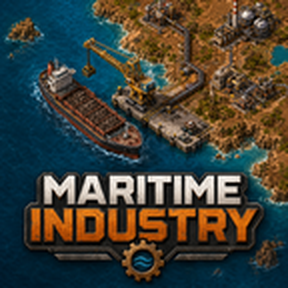
Build island industry, survey remote resources, and automate ocean bulk shipping with industrial ports, bulk carriers, offshore oil and maritime power on an ocean-first archipelago world.
Mods introducing new content into the game.
Version: 1.1.1
Date: 2026-10-19
  Fixes:
    - Fixed all Nauvis/default world maps unintentionally inheriting Maritime Archipelago's extreme water generation settings.
    - Restored ordinary vanilla terrain, continents and resource distribution for Default and Vanilla Continents presets.
    - Limited regional ore biases, remote resource richness and distant petroleum/uranium placement rules to Maritime Archipelago.
    - Fixed an Archipelago elevation clamp that forced all negative ocean heights to land outside spawn. The starter-land branch now drops below sea level after its safe radius, allowing real ocean corridors and separate islands.
    - Corrected the broad/coastal noise offset and ocean bias so islands can form without swallowing navigable water; terrain remains isolated to the Archipelago preset.
    - Added an Archipelago-only irregular starting landmass buffer to protect buildable space and vanilla starting-resource placement across seeds.
    - Removed a barren ore ring outside the protected starter area by fading gradually into distant regional ore distribution.
    - Differentiated Vanilla Continents from Default with fewer, broader ocean bodies while retaining normal Nauvis resources.
    - Scoped starter coal/trees/rocks fallback to new Archipelago maps without interfering with normal vanilla world creation.
  Compatibility:
    - Requires Factorio 2.1.22+, Cargo Ships 2.1.8+ and Forgeworks Core 0.3.10+.
    - Existing saves remain loadable. Map-generation improvements affect newly created maps; generated terrain is not retroactively reshaped.
Version: 1.1.0
Date: 2026-10-18
  Features:
    - Added expanded bulk shipping for uranium ore and optional Space Age calcite, tungsten ore, holmium ore, scrap, ice and carbon.
    - Added optional Space Age 20 ft/40 ft containers for planetary manufactured products and unplaced industrial structures; machinery quantities are capped per container.
    - Added project-cargo heavy-lift frame packaging for major Space Age industrial structures.
    - Added Expanded Bulk Shipping and optional Planetary Container Logistics technologies; existing researched technologies are unchanged.
  Fixes:
    - Fixed generated Ro-Ro, project-cargo and intermodal container labels when their source items inherit names from placeable entities rather than item-name locale keys.
    - Uses Forgeworks Core 0.3.10 item display-name and icon-layer helpers, preserving translated names and explicit prototype localisations.
  Compatibility:
    - Requires Forgeworks Core 0.3.10+ and Factorio 2.1.22+; Space Age remains optional and no new storage migration is required.
    - Cargo recipes transport items, not live entities: configured modules, inventories and fluids are not serialised; player must mine machines before packaging.
Version: 1.0.0
Date: 2026-10-17
  Features:
    - Completed the Maritime Industry 1.0 logistics loop by folding the remaining roadmap directly into the public 0.10.0 successor rather than creating placeholder intermediate releases.
    - Added specialised Ro-Ro, refrigerated-container and heavy project-cargo ships with dedicated reusable cargo frames, cold-chain containers and packing/unpacking recipes.
    - Added a medium-range product tanker tier so refined-product shipping scales beyond the coastal tanker without replacing VLCC crude logistics.
    - Added Ro-Ro ramp, heavy project-cargo crane and refrigerated yard terminal equipment for the specialised fleet.
    - Added an Integrated Port Logistics Exchange for high-capacity manufactured and packaged cargo staging inside major ports.
    - Added Offshore Service Platforms, Offshore Service Piers, Offshore Supply Vessels, service-package logistics, marine salvage processing and deliberately low-yield offshore mineral sampling.
    - Added optional Maritime Throughput Contracts and Port Contract Offices driven by real Port Control Tower throughput rather than mandatory progression gates.
    - Added Port Network Hubs that aggregate nearby Port Control Tower sectors, berth utilisation, congestion, anchorage queues and throughput statistics for megahub-scale operations.
    - Added per-minute item/fluid throughput, queue-seconds, peak queue and contract-ready circuit telemetry to the port automation layer.
  Progression:
    - Added Specialised Shipping, Offshore Services, Integrated Port Logistics, Maritime Contracts and Megahub Operations technologies to complete the post-0.10 progression path.
    - Existing 0.10.0 research and ship schedules remain intact; the new 1.0 systems are additive and no technology is silently marked researched on upgrade.
  Compatibility:
    - Requires Factorio 2.1.22+, Cargo Ships 2.1.8+, Cargo Ships: Oil Rig 2.1.2+, Cargo Ships: Floating Electric Pole 2.1.0+ and Forgeworks Core 0.3.9+.
    - Migrated deep-draft and protected-ocean collision-mask mutation to the shared Forgeworks Core 0.3.9 collision-mask helpers so implicit Factorio/Cargo Ships masks are materialised safely before Maritime layers are changed.
    - Existing 0.9.0 migration history is retained; no new 1.0.0 save migration is required because all 1.0 unlocks are on new technologies and runtime registries rebuild on configuration change.
    - Space Age remains optional; refrigerated Space Age cargo recipes are generated only when their source items exist.
  Fixes:
    - Added explicit recipe icons for the multi-output offshore resupply, mineral sampling and marine salvage processing recipes so Factorio 2.1 can load them correctly.
  Runtime:
    - Port Control Towers track actual item/fluid movement while a ship remains docked and publish rolling one-minute throughput windows without rewriting schedules or train groups.
    - Maritime Contract Offices use the Factorio 2.1 script-disable API and activate only when a nearby tower meets the configured throughput target.
    - Offshore Service Platform placement requires the structure footprint to be predominantly over recognised navigable water and safely refunds invalid placements.
    - Project Cargo Ships join the native collision-based deep-draft fleet and project-cargo cranes require genuine deepwater terminal frontage.
Version: 0.10.0
Date: 2026-10-14
  Improvements:
    - Migrated shared prototype, recipe, technology, runtime storage and position utility use to Forgeworks Core instead of maintaining duplicate generic helpers locally.
    - Updated the Forgeworks Core minimum requirement to 0.3.6 so Maritime Industry uses the current shared Factorio 2.1 compatibility layer.
    - Kept Maritime-specific ship, port, progression, world-generation and traffic-control behaviour in Maritime Industry; this release does not rebalance the 0.9.0 gameplay systems.
  Compatibility:
    - Requires Factorio 2.1.20+, Cargo Ships 2.1.8+ and Forgeworks Core 0.3.6+.
    - Existing 0.9.0 saves are supported directly; the existing 0.9.0 Heavy Bulk Shipping migration is retained and no new 0.10.0 save migration is required.
    - Audited against Forgeworks Core 0.3.6 helpers and Factorio 2.1 API compatibility changes, including the plural fuel-categories runtime API. Maritime Industry contains no deprecated LuaItemPrototype::fuel_category reads.
Version: 0.9.0
Date: 2026-10-02
  Features:
    - Added Advanced Port Operations as the first port-automation technology tier.
    - Added Berth Controllers that publish the nearest Maritime berth's occupancy, readiness, incoming traffic, stopped ship ID and docked item/fluid cargo to the circuit network.
    - Added Port Control Towers that aggregate berth capacity, managed berths, occupancy, incoming traffic, anchorage traffic, dispatch capacity and congestion within a 96-tile harbour radius.
    - Added Harbour Anchorages as Cargo Ships-compatible scheduled waiting stops with a default one-ship limit and native circuit reporting for stopped ship ID and traffic count.
    - Added Maritime Traffic Control as the second automation technology tier.
    - Added Harbour Entry Signals and Harbour Chain Signals for native Cargo Ships waterway traffic metering and protected harbour approaches.
    - Added a Panamax-scale Heavy Bulk Ship Loader/Reclaimer with longer reach and faster native transfer for deep-draft dry-bulk terminals.
  Mechanics:
    - Port automation refreshes once per second rather than every tick.
    - Each Berth Controller owns a conservative one-ship admission limit for its linked Maritime berth, preventing multiple ships from reserving one physical berth.
    - If a berth uses Factorio's native circuit-controlled train limit, Maritime automatically yields control and restores the berth's previous manual limit.
    - Removing or unlinking a Berth Controller restores the berth's previous manual train limit.
    - Automatic dispatch uses Factorio's native train-limit and Destination Full behaviour: ships whose next managed berth is full remain at the preceding stop/anchorage and are released by the game when capacity opens. Maritime does not rewrite schedules, change train groups or force schedule indices.
    - When multiple Berth Controllers can see the same berth, only the closest controller owns admission control; the others remain read-only monitors for that berth.
    - Port Control Towers now publish Port Entry Open, Port Hold, holding capacity and holding usage. Port Hold activates when all controller-managed berth capacity is reserved.
    - Berth capacity uses Factorio 2.1.20 train reservation counts rather than raw train counts, avoiding false Port Hold states when one approaching train is counted multiple times across braking distance.
    - Harbour Entry Signals are preconfigured to close only when a wired Port Control Tower sends Port Hold > 0; unwired signals remain open, preventing accidental deadlocks during construction.
    - Harbour Chain Signals preserve Cargo Ships native chain-signal reservation behaviour for junctions and berth throats.
    - The Heavy Bulk Ship Loader/Reclaimer is a reversible native inserter: rotate it 180 degrees to swap loading/unloading direction, and placement is accepted only beside genuine deepwater.
    - Anchorage train limits and harbour-signal circuit settings are construction defaults only; later configuration changes, save loads and cloning preserve player-edited values.
    - Blueprint-built Anchorages and Harbour Entry Signals preserve non-default train-stop/circuit settings instead of having the Maritime construction preset forced over them.
    - Removing the active Berth Controller restores or transfers berth admission ownership immediately instead of waiting for the next one-second automation update.
    - Hardened port-automation removal handling so invalid LuaEntity references are never dereferenced during cleanup events.
  Compatibility:
    - Stable 0.9.0 targets Factorio 2.1.20+, Cargo Ships 2.1.8+ and Forgeworks Core 0.3.2+ so the release uses the current Forgeworks/Cargo Ships compatibility baseline.
    - Existing 0.8.x berths and ships remain unchanged; the automation layer is additive and rebuilds its runtime registry on configuration change.
    - Existing 0.8.x saves with Heavy Bulk Shipping already researched receive the new Heavy Bulk Ship Loader/Reclaimer recipe through the 0.9.0 migration; no manual research reset is required.
    - Player circuit-controlled train limits take precedence over Maritime automatic berth admission.
    - No new third-party graphics are bundled; the new equipment composes Base and Cargo Ships artwork already present as dependencies.
Version: 0.8.2
Date: 2026-10-02
  Bugfixes:
    - Fixed an on_configuration_changed crash when offshore-oil normalisation encountered a well that had already been merged and destroyed earlier in the same pass.
Version: 0.8.1
Date: 2026-09-20
  Bugfixes:
    - Fixed a 0.8.1 new-game crash caused by reading the player spawn position from LuaSurface instead of LuaForce on Factorio 2.1.
    - Guaranteed a playable Maritime Archipelago start by ensuring the Nauvis starter island has a minimum supply of coal, harvestable trees and mineable rocks after its starting chunks are generated.
    - Existing starter coal patches that generate unusually small are topped up in place; seeds with no starter coal receive a compact fallback patch on valid nearby land.
    - Fixed unusable offshore-oil layouts where two wells could generate too close for separate Cargo Ships Oil Rigs while still being awkward for one rig to service. Nearby incompatible wells are now consolidated while preserving their combined oil amount.
    - Existing 0.8.0 saves are normalised once on configuration change, and newly generated chunks apply the same offshore-oil spacing rule automatically.
  Compatibility:
    - Starter guarantees operate after terrain generation and therefore remain effective with world-generation combinations such as Dry Ores without replacing another mod's resource prototypes.
    - Offshore oil remains owned by Cargo Ships: Oil Rig; Maritime Industry only resolves physically unusable close-spacing cases and preserves total generated richness.
Version: 0.8.0
Date: 2026-08-30
  Features:
    - Added Deep-Draft Port Engineering as the infrastructure foundation for Maritime Industry's heavy-shipping tier.
    - Added Deepwater Dredging Sections that deepen existing ordinary/shallow harbour water into vanilla deepwater for heavy-vessel channels and turning basins.
    - Added a dedicated Deep-Draft Quay Edge lane for heavy-vessel berths while preserving Cargo Ships waterway compatibility.
    - Added the Cargo Ships-compatible Deep-Draft Berth for Panamax, ocean-container and VLCC-class services.
    - Added the Panamax Bulk Carrier as the first heavy-draft vessel: a slow high-capacity dry-bulk trunk carrier built in the Commercial Dry Dock.
    - Added the Ocean Container Ship as a deep-draft hub-to-hub liner with exactly twice the slot capacity ratio of the Feeder Container Ship.
    - Added the Heavy Ship-to-Shore Container Crane with longer reach, higher transfer speed and a genuine-deepwater berth requirement.
    - Added the Deep-Draft Container Berth as a dedicated scheduled stop for mainline container terminals.
    - Added the Very Large Crude Carrier (VLCC) as the heavy deep-draft petroleum trunk carrier, with exactly twice the configured-capacity ratio of Maritime's existing Crude Oil Tanker.
    - Added VLCC-only high-capacity crude loading and unloading arms with dedicated ship connection categories and crude-oil filtering.
    - Added the Deep-Draft Tanker Berth as the scheduled terminal stop for VLCC crude services.
    - Deep-Draft Berths enforce real deepwater adjacency at build time and reject/refund placements beside ordinary shallow harbour water.
  Mechanics:
    - Ordinary/shallow water and standard Quay Edge lanes now carry a Maritime-only shallow-draft blocker collision layer; deepwater and Deep-Draft Quay Edge do not. Heavy vessels use this layer in their native rolling-stock collision masks, physically preventing shallow-water operation without per-tick scripting.
    - Deepwater produced by harbour deepening inherits Maritime Industry's existing deep-ocean reclamation protection, so a deliberately deepened shipping channel cannot immediately be erased with ordinary landfill/foundation.
    - Existing Cargo Ships waterways remain the navigation network; deep-draft engineering changes water depth, not scheduling or pathfinding ownership.
    - The Ocean Container Ship uses the same native shallow-draft collision blocker as the Panamax on both hull and engine; no per-tick draft script is introduced.
    - Heavy container gantries reuse the proven quay-crane runtime presenter but require actual deepwater in front of the crane while standard gantries retain ordinary coastal operation.
    - The VLCC hull and dedicated engine use the same native shallow-draft blocker as the Panamax and Ocean Container Ship; high-capacity VLCC transfer arms additionally reject placement unless genuine deepwater is within terminal reach.
    - VLCC transfer arms use a separate mi-vlcc-crude-tanker connection category, preventing the normal Crude Oil Tanker from using heavy terminal hardware and vice versa.
  Progression:
    - Deep-Draft Port Engineering requires Port Construction, Shipbuilding and chemical science, placing heavy-port civil works after the 0.7.0 shipyard foundation.
    - Heavy Bulk Shipping follows Deep-Draft Port Engineering and Dry Bulk Logistics, so the Panamax cannot be researched before both its cargo system and deepwater port standard exist.
    - Ocean Container Shipping follows Deep-Draft Port Engineering and Containerisation, keeping feeder service useful before mainline deepwater liner infrastructure becomes available.
    - VLCC Crude Shipping requires Deep-Draft Port Engineering, Tanker Industry and Offshore Industry, and also requires Deep Sea Oil Extraction when that dependency technology is present.
  Bugfixes:
    - Hardened deep-draft collision-mask handling by materialising Factorio 2.1 default masks before adding Maritime layers, preserving native water-tile and complete rolling-stock collision semantics.
    - Reasserted the deep-draft collision contract during data-final-fixes so dependency finalisation cannot leave shallow water, standard quay lanes or heavy vessel halves with incomplete masks.
  Balance:
    - Panamax bulk capacity is 20% of Cargo Ships' configured cargo-ship slot count versus 8% for Maritime's Handysize carrier, giving 2.5x the bulk-lot slots at substantially greater weight and lower speed.
    - Ocean Container Ship capacity is 70% of Cargo Ships' configured cargo-ship slot count versus 35% for the Feeder Container Ship, giving exactly 2x the container slots at lower speed and much greater weight.
    - VLCC capacity is 160% of Cargo Ships' configured tanker capacity versus 80% for Maritime's Crude Oil Tanker, giving exactly 2x the fluid capacity at substantially greater weight and only 60% of native tanker speed.
    - VLCC crude arms pump at least 160 fluid units per tick, four times the minimum Maritime tanker-arm rate, while staying filtered to crude oil.
  Compatibility:
    - Existing 0.7.0 vessels remain shallow-draft capable and are not given the new blocker layer; only the Panamax, Ocean Container Ship and VLCC heavy classes use it in this build.
    - No every-tick vessel monitor is introduced; depth enforcement for the heavy fleet is prototype/collision based.
    - No new third-party graphics are bundled; deep-draft infrastructure references Base and Cargo Ships artwork.
Version: 0.7.0
Date: 2026-08-26
  Features:
    - Added Marine Engineering and Shipbuilding as the foundation of Maritime Industry's dedicated shipyard progression.
    - Added the Small Vessel Slipway for boats and hydrographic survey craft.
    - Added the Shipyard Fabrication Hall for producing marine hull plate, prefabricated hull sections, propulsion units, ship control systems and marine piping systems.
    - Added the Commercial Dry Dock as the dedicated construction machine for full-size commercial vessels.
    - Commercial Dry Docks enforce coastal placement, accepting a narrow engineered quay/apron strip between the dock and navigable water while rejecting inland shipyards.
    - Converted Maritime Industry's Handysize Bulk Carrier, Feeder Container Ship and all three specialist tanker classes to dry-dock construction.
    - Converted the Hydrographic Survey Boat to slipway construction.
  Overhaul:
    - Cargo Ships' native Boat, Cargo Ship and Oil Tanker now follow the same shipyard rules while Maritime Industry is active; their runtime entities and ship definitions remain owned by Cargo Ships.
    - Reworked ship recipes around prefabricated hull, propulsion, control and piping modules instead of direct character crafting from raw steel and engines.
    - Marine Engineering now precedes Water Transport so the slipway and component chain exist before the first Boat recipe unlocks; Shipbuilding sits after Automated Water Transport and before full-size Cargo Ships and Tank Ships.
  Balance:
    - Ship construction is deliberately slow and infrastructure-heavy, making the first vessel a capital project without introducing recurring maintenance or wear.
    - The early shipyard chain remains red/green science and avoids petroleum-derived ingredients so the ocean-first progression stays viable before offshore crude is established.
  Compatibility:
    - Uses native Factorio assembling-machine recipe categories; no scripted crafting loop is introduced.
    - Existing Cargo Ships waterways, schedules, engines, pumps, offshore oil rigs and floating-power behaviour are unchanged.
    - No new third-party graphics are bundled in this release; shipyard presentation is composed from existing Base and Cargo Ships graphics.
Version: 0.6.0
Date: 2026-08-23
  Features:
    - Added Offshore Industry as the next Maritime Industry integration tier, connecting the required Cargo Ships: Oil Rig and Floating Electric Pole add-ons to the Maritime research tree.
    - Added a dedicated Offshore Infrastructure crafting subgroup and moved the native Oil Rig and Floating Electric Pole items/recipes into the Maritime Industry crafting group while keeping their source-mod entities intact.
    - Split Tanker Industry into three vessel roles: Crude Oil Tanker, Coastal Product Tanker and Chemical Tanker.
    - Added dedicated crude and chemical marine loading/unloading arms; tanker classes now use matching fluid-wagon connection categories so terminal hardware only attaches to the intended Maritime tanker role.
    - Crude loading and unloading arms are hard-filtered to crude oil, providing an enforced high-volume crude terminal path.
    - Added Quay Apron Sections, a hazard-marked waterway-compatible berth surface for the working edge beside pumps, cranes and mooring positions.
    - Added Port Construction directly to 0.6.0 so engineered harbours can be built instead of relying on natural coastline geometry.
    - Added a true waterway-compatible Quay Edge surface for the final berth strip beside docked ships; it is walkable/buildable ground and Cargo Ships waterways explicitly accept its dedicated quay-surface layer.
    - Added Harbour Dredging Sections that excavate ordinary Nauvis ground, landfill and port paving into standard navigable water for straight channels and rectangular harbour basins.
    - Added Reinforced Quay Walls for finishing straight reclaimed waterfront edges and defining industrial berth faces.
    - Added Tanker Industry as the dedicated liquid-bulk logistics branch after Industrial Ports and Cargo Ships tanker handling.
    - Added the 100,000-unit Terminal Tank Farm for high-capacity circuit-readable shore storage.
    - Added high-throughput Marine Loading Arms and Marine Unloading Arms derived from Cargo Ships' ship-pump connection system.
    - Added the Cargo Ships-compatible Tanker Berth for scheduled liquid-bulk services.
    - Added the Coastal Product Tanker for fast short- and medium-haul refinery-product routes.
  Progression:
    - Offshore Industry follows Dry Bulk Logistics and remains entirely in red/green science.
    - Deep Sea Oil Extraction now branches from Offshore Industry and requires Cargo Ships tanker handling, creating a coherent survey/freight -> offshore engineering -> tanker -> oil-rig route.
    - Rebalanced Deep Sea Oil Extraction to red/green science while preserving Cargo Ships: Oil Rig's own prerequisite mode, preventing petroleum-derived chemical science from gating the intended first offshore petroleum source.
    - Overseas Energy Distribution now branches from Offshore Industry while preserving Cargo Ships: Floating Electric Pole's existing Electric Energy Distribution I requirement.
  Fixes:
    - Fixed Quay Apron continuation on deepwater berths: the shore-anchor guard now permits one engineered Quay Edge/Apron tile between new paving and real shore, allowing a two-tile Edge + Apron working strip while still rejecting a third outward row.
    - Reworked Quay Edge Sections from the temporary overlay workaround into a true paved berth tile, allowing a continuous usable quay surface directly beneath straight Cargo Ships berth waterways.
    - Added a deepwater safety guard: Quay Edge and Quay Apron paving on natural deep ocean must stay within the engineered two-tile berth width of adjacent real shore or reclaimed port land; one shore-backed Quay Edge/Apron tile may serve as the single intermediate anchor, while a second intermediate quay tile is rejected.
    - Fixed valid deepwater berth paving being falsely rejected because the previous runtime guard depended on finding a nearby straight-waterway entity instead of recognising the actual adjacent quay/shore tile.
    - Restored the Marine Loading Arm to Cargo Ships' native loading-pump geometry while explicitly enforcing shore-to-ship flow.
    - Explicitly enforce opposite shore/ship flow directions on both Maritime marine arms and slightly increase tanker valve latch tolerance.
    - Clarified that tanker pumps require a tanker stopped orthogonally on straight waterway; diagonal and curved waterway cannot accept fluid-wagon pump connections.
    - Fixed Terminal Tank Farm pipe connection positions so all four connections remain strictly inside the expanded entity collision box under Factorio 2.1 prototype validation.
  Improvements:
    - Product loading/unloading arms retain their established 0.6.0 entity names for save compatibility but now explicitly mate only with the Coastal Product Tanker.
    - Crude tankers favour capacity over speed at 80% of configured Cargo Ships tanker capacity; product tankers remain fast at 50%; chemical tankers trade capacity for specialised service at 35%.
    - Quay Apron and Quay Edge tiles share the same engineered quay-surface layer and a two-stage deepwater shore-anchor guard: Edge + Apron can form a two-tile berth strip, while a third outward row is rejected.
    - Tanker Industry now requires Port Construction so players receive straight-berth shaping tools before marine loading arms and tanker terminals.
    - Reworked the Terminal Tank Farm into an 8x6 three-by-two vessel bank using native Base storage-tank graphics while retaining one native 100,000-unit fluid inventory and circuit connection.
    - Reworked Marine Loading and Unloading Arms into heavier twin-pump terminal skids while preserving Cargo Ships valve positions, connection categories and tanker-fluid transfer geometry.
    - Increased marine-arm selection width for the larger machinery without changing its water-compatible collision geometry.
  Balance:
    - Coastal Product Tanker capacity scales to 50% of Cargo Ships' configured tanker capacity while running 20% faster than the mainline tanker.
    - Marine loading arms run at twice the base pump rate so terminal throughput can keep pace with industrial tank farms without bypassing Cargo Ships fluid connections.
    - Tanker Industry uses chemical science and remains a parallel cargo branch from Industrial Ports rather than requiring Containerisation.
  Compatibility:
    - Maritime Industry does not duplicate or replace the Oil Rig or Floating Electric Pole entities; the hard-dependency add-ons remain authoritative for their prototypes and runtime behavior.
    - The Offshore Industry integration leaves the tanker vessels, marine loading arms, quay construction, dredging and ship runtime behavior in this release unchanged.
    - Tanker ships continue to use Cargo Ships' native waterway, engine-coupling, scheduling and ship-pump systems.
    - Maritime references Base and Cargo Ships graphics directly and does not copy tanker, pump or tank artwork into the Maritime package.
Version: 0.5.0
Date: 2026-08-23
  Fixes:
    - Fixed Feeder Container Ship deck alignment through the south/east half of the rotation by rebuilding all 256 deck frames around the correct ship sprite centre.
    - Fixed Feeder Container Ship load failure by expanding the Maritime container-deck overlay to Cargo Ships' native 256-direction rotated-sprite layout.
    - Removed inherited Cargo Ships bulk-hold hatch covers from the Feeder Container Ship so the Maritime container deck remains visible while idle and in every orientation.
    - Quayside container gantry visuals rebuild on normal initialization/configuration changes and are no longer affected by the tall-entity visibility toggle.
  Features:
    - Added Containerisation as the next Maritime Industry progression tier after Industrial Ports.
    - Added reusable 20 ft and 40 ft intermodal container shells.
    - Added containerised cargo recipes for major manufactured intermediates, electronics, engines and rocket components.
    - Added dedicated Container Packing and Container Unpacking Stations; unpacking returns the empty container for reuse.
    - Added a 6x5 Container Yard for high-capacity empty and loaded box storage.
    - Added Rail Container Cranes and long-reach Quayside Container Gantry Cranes.
    - Added Cargo Ships-compatible Container Berths for scheduled liner services.
    - Added the Feeder Container Ship for faster medium-capacity inter-island container routes.
  Improvements:
    - Corrected container crane display scale: ship-to-shore gantry now uses the supplied artwork's intended 1.5x scale; rail-yard crane increased to 0.9x while remaining visibly smaller.
    - Reworked Container Packing and Unpacking Stations into larger 5x4 freight-processing sheds with visible container banks rather than plain tinted assembler clones.
    - Reworked the Container Yard presentation into multi-colour lower and upper container tiers while retaining one circuit-readable inventory entity.
    - Increased visual separation between the Rail Container Crane and Quayside Container Gantry Crane through distinct platform scale, safety colours and terminal-role iconography.
    - Strengthened Container Berth presentation and gave the Feeder Container Ship a restrained blue-grey hull identity without bundling or copying Cargo Ships graphics.
    - Added a dedicated multi-colour container-deck overlay to the Feeder Container Ship while retaining Cargo Ships' original hull animation and runtime ownership.
    - Replaced the screenshot-derived crane placeholders with clean four-direction transparent crane sprites based on the Apache-2.0 Port Crane Loader artwork, including a Maritime yellow rail-crane variant and red ship-to-shore crane.
    - Reworked the Quayside Container Gantry Crane into an invisible functional inserter plus a separate tall visual entity rendered above docked ships; R toggles between ship loading and unloading after placement.
    - Added coastal placement validation for the Quayside Container Gantry Crane so it must be aligned with water in front and land behind.
  Balance:
    - Empty 20 ft and 40 ft containers now use one inventory slot each, making return/repositioning capacity a real part of container-network design.
    - 20 ft containers carry ten normal item stacks; 40 ft containers carry twenty.
    - Loose ores, coal and stone remain excluded from container packing so dry-bulk terminals retain their dedicated role.
    - Empty-container recovery creates a return-logistics requirement instead of consuming containers on every trip.
  Compatibility:
    - Dry-bulk lots now preserve the represented raw-material weight and opt out of autogenerated recycler/decomposition routes, matching the container cargo safeguards.
    - Handysize Bulk Carrier capacity now scales to 8% of Cargo Ships' configured cargo-ship capacity, preserving its 80-slot default while respecting custom capacity settings.
    - Container cargo recipes are only generated when the corresponding item prototype exists, avoiding invalid unlocks in overhauls that remove optional vanilla intermediates.
    - Generated cargo names now preserve an overhaul item's explicit localised name instead of assuming a vanilla locale key.
    - Container recipe amounts are bounded to Factorio's 65,535-item prototype limit; impossible extreme-stack cargo definitions are skipped rather than creating invalid prototypes.
    - Packed containers now retain the mass of their represented cargo plus the empty shell, preventing container packing from bypassing item-weight logistics in Space Age-style environments.
    - Disabled autogenerated recycling/decomposition for container packing and unpacking so the reusable-shell loop remains authoritative.
    - Container Yards retain their inherited circuit connector so terminal inventories can be monitored and controlled through the circuit network.
    - Feeder Container Ship capacity now scales to 35% of Cargo Ships' configured cargo-ship capacity and preserves Cargo Ships' engine fuel-capacity settings instead of overriding them.
    - Ships and berths continue to use Cargo Ships' native ship-definition and waterway scheduling systems.
Version: 0.4.0
Date: 2026-08-18
  Features:
    - Added protected deep-ocean shipping lanes on vanilla deepwater and deepwater-green tiles.
    - Ordinary landfill and compatible foundation-style fill can no longer reclaim protected deep ocean.
    - Reinforced quay foundation sections can now be placed directly over coastal and shallow water to create refined-concrete port frontage.
  Balance:
    - Shallow/coastal water remains reclaimable so ports can be shaped naturally without allowing continent-scale ocean paving.
    - Elevated rail supports and ramps can no longer span protected deep ocean, preserving ships as the long-distance inter-island transport layer.
  Compatibility:
    - Deep-ocean fill restrictions are applied generically to ground-producing tile placers instead of hard-coding specific third-party landfill mods.
    - Cargo Ships waterways, retractable bridges, offshore oil rigs, buoys and Cargo Ships floating electric poles remain allowed in deep ocean.
    - No Deepsea Mechanic dependency is required; Maritime Industry owns its Factorio 2.1 implementation directly.
Version: 0.3.0
Date: 2026-08-17
  Features:
    - Added Industrial Ports, the first full-scale Maritime Industry port-development tier.
    - Added reinforced quay foundation sections for developed port construction.
    - Added the 5x5 Port Authority for harbour control and local charting.
    - Added the Industrial Dry Bulk Berth as the reinforced developed-port berth.
    - Added 5x5 Bulk Stockpiles for high-capacity dry-bulk storage.
    - Added the three-bin Bulk Rail Hopper and bidirectional Bulk Rail Transfer Crane for train-to-port interchange.
    - Added the long-boom Stacker-Reclaimer for automated stockyard transfer.
  Improvements:
    - Reworked port machinery scale and presentation from in-game testing so the terminal reads as heavy industrial infrastructure.
    - Expanded the Bulk Rail Transfer Crane and Quayside Bulk Transfer Crane to 4x4 heavy-equipment footprints with larger working arms.
    - Expanded the Stacker-Reclaimer to a 7x3 long-boom stockyard machine with a distinct dark-green industrial silhouette.
    - Rebuilt the Bulk Rail Hopper as a taller receiving bank with visible bulk material instead of a chest-like placeholder.
    - Reworked the Bulk Stockpile into an open yard pile and improved crafting/technology icon differentiation across the port set.
    - Removed inherited random radar backer-name suffixes from Port Authority entities, including already-placed authorities after configuration changes.
    - Kept the first survey and dry-bulk shipping route in red/green science while placing developed industrial ports later in progression.
  Compatibility:
    - Added fallbacks for overhauls that replace vanilla concrete or remove the native bulk-inserter prototype.
    - Retained the established Maritime Archipelago world shape and remote-resource geography unchanged from the tested 0.2.0 foundation.
  Dependencies:
    - Requires Cargo Ships 2.1.6 or newer.
    - Requires Cargo Ships: Oil Rig 2.1.2 or newer.
    - Requires Cargo Ships: Floating Electric Pole 2.1.0 or newer.
    - Requires Forgeworks Core 0.3.1 or newer.
Version: 0.2.0
Date: 2026-08-16
  Features:
    - Added Hydrographic Surveying as the first Maritime Industry exploration technology.
    - Added a Hydrographic Survey Boat that uses Factorio 2.1 native vehicle chunk exploration while travelling, with no runtime polling script.
    - Added Cargo Ships Mod Data definitions for the survey boat's freely driven and waterway versions.
    - Added a long-range Hydrographic Survey Station for coastal and remote-island charting.
    - Added a dedicated Hydrographic Surveying item subgroup and progression branch.
  Balance:
    - Moved the first Maritime Industry exploration and dry-bulk route entirely into red/green science progression.
    - Replaced the Handysize bulk carrier's advanced-circuit requirement with electronic circuits so petroleum is not required before the first bulk route can be established.
    - Replaced concrete in the first Dry Bulk Berth recipe with stone brick so the initial maritime route does not depend on later construction materials.
    - Reduced Dry Bulk Logistics research from 200 to 150 science packs and made Hydrographic Surveying a prerequisite.
  World generation:
    - Retained the 400% water-frequency / 800% water-coverage archipelago world and remote resource geography introduced in 0.1.0.
    - Starter iron, copper, coal and stone remain finite while major deposits are pushed toward outlying islands.
    - Land crude oil and uranium remain strategic remote resources; offshore oil remains the intended early petroleum route.
  Dependencies:
    - Requires Cargo Ships 2.1.6 or newer.
    - Requires Cargo Ships: Oil Rig 2.1.2 or newer.
    - Requires Cargo Ships: Floating Electric Pole 2.1.0 or newer.
    - Requires Forgeworks Core 0.3.1 or newer.
Version: 0.1.0
Date: 2026-08-16
  Features:
    - Added Maritime Industry's first dry-bulk logistics progression.
    - Added the Handysize bulk carrier using Cargo Ships 2.1 ship-definition Mod Data integration.
    - Added dry bulk berths compatible with Cargo Ships waterways and schedules.
    - Added bulk cargo terminals and long-reach bulk ship loaders.
    - Added bulk-lot handling for iron ore, copper ore, coal and stone.
    - Added a dedicated Maritime Industry item group and technology branch.
    - Made new Nauvis worlds default to the Maritime Archipelago: 400% water frequency and 800% water coverage.
    - Added maritime resource geography with finite starter resources, remote resource specialisation and richer distant deposits.
  Dependencies:
    - Requires Cargo Ships 2.1.6 or newer.
    - Requires Cargo Ships: Oil Rig 2.1.2 or newer.
    - Requires Cargo Ships: Floating Electric Pole 2.1.0 or newer.
    - Requires Forgeworks Core 0.3.1 or newer.