
【0.12.37更新】【0.12.37 Update】
-性能优化.
-Performance optimizations.
【0.12.36更新】【0.12.36 Update】
-修复未配置货物仍能进入的问题。
-Fixed an issue where items could enter Logistics Stations even when they were not configured to accept them.
【中文】
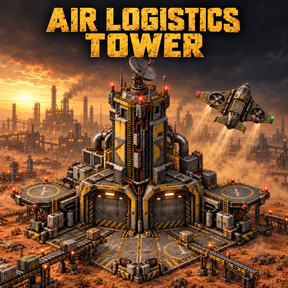
将 《戴森球计划》式的物流塔网络带入 《异星工厂》,使用运输飞机与星际运载飞船,在工厂、基地和星球之间自动调配物资。从早期的星球内配送,到后期的跨星球物品与流体运输,逐步建立覆盖整个工厂的物流体系。
两种物流塔,覆盖不同运输阶段
- 航空物流塔:红瓶科技即可解锁,使用运输飞机完成同一星球上的物资配送,无运输距离限制。
- 星际物流塔:蓝瓶科技解锁,拥有更大的建筑、更高的基础仓储容量和运输能力,支持跨星球物品与流体运输。
- 星际物流塔可同时停放飞机与星际飞船,通过飞机与航空物流塔互相配送,连接星球内和星际运输网络。
- 供给端可以主动送货,需求端也可以派出自己的飞机或飞船前往取货。
独立分区与灵活配送
每座塔拥有五个独立物品分区,可分别指定物品、品质、物流模式和目标数量。各分区容量独立,避免某一种货物占满整座塔。
物品库存以数字显示,方便查看现有数量与在途货物。运输支持优先级设置,同一优先级的物流塔之间公平分配取送任务。
起送量按 载货容量百分比 设置,默认满载起飞,也可以降低门槛以适应小批量运输。
飞机与飞船存放在 独立机库 中,并可设置机库补货数量,由物流机器人运送补充。
传送带、流体与机器人协作
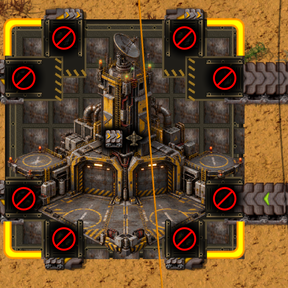
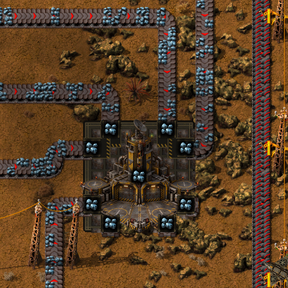
航空物流塔 每侧提供两个传送带接口,星际物流塔 每侧提供三个。接口根据连接传送带的方向自动判断输入或输出:
- 输入接口:自动检测传入物品并设置筛选。
- 输出接口:支持独立筛选,同种货物可由多个输出接口均衡输出。
- 接口吞吐能力:随连接传送带的速度与堆叠能力变化。
星际物流塔每个方向提供一个流体接口,支持管道输入输出、流体需求与供给配置,以及运输过程中的温度保留。
两种物流塔均整合机器人指令平台功能,支持原版物流机器人和建设机器人。每个物品分区可独立关闭机器人物流,或采用以下等效模式:
- 蓝箱模式:只向物流网络请求物品。
- 红箱模式:只向物流网络供给物品。
- 绿箱模式:同时请求和供给物品,供给优先级较低。
机器人需求数量与飞机、飞船的物流规则分别设置,方便组合不同运输方式。
信号控制与持续成长
通过原版红绿线接入信号网络,可读取库存、控制物流塔开关,并通过信号设置物品筛选等物流规则。
无限科技同时强化航空与星际物流塔,可提升:
- 每个分区的仓储容量。
- 飞机与飞船的运输速度。
- 飞机与飞船的载货量。
- 单座塔同时执行运输任务的飞机或飞船数量。
仓储科技每级为 每个物品分区增加十格容量。
物品保鲜
易变质物品存放在物流塔期间 暂停变质计时,离塔后继续按剩余时间变质。
【English】
Bring a Dyson Sphere Program–inspired logistics tower network to Factorio. Transport aircraft and interstellar cargo ships automatically move supplies between factories, outposts, and planets. Start with planetary deliveries and expand into a network supporting cross-planet item and fluid transport.
Two Tower Types for Different Stages of Expansion
- Air Logistics Tower: Unlocked with automation science packs (red science). Uses transport aircraft to deliver items anywhere on the same planet, with no transport distance limit.
- Interstellar Logistics Tower: Unlocked at the chemical science stage (blue science). Features a larger structure, greater base storage capacity, and higher transport capabilities, with support for cross-planet item and fluid logistics.
- Interstellar towers can house both aircraft and cargo ships. Aircraft allow them to exchange items with air logistics towers, connecting planetary and interstellar logistics networks.
- Supply towers can dispatch deliveries, while requesting towers can send their own aircraft or cargo ships to collect available supplies.
Independent Storage and Flexible Dispatch
Each tower has five independent item storage sections, each with its own item, quality, logistics mode, and target quantity. Storage capacities are separate, preventing a single item from filling the entire tower.
A numerical inventory display makes it easy to check stored quantities and cargo in transit. Configurable transport priorities direct supplies where they are needed, while towers with equal priority share pickup and delivery tasks fairly.
The minimum departure load is configured as a percentage of cargo capacity. Vehicles require a full load by default, but the threshold can be lowered for smaller shipments.
Aircraft and cargo ships are stored in dedicated hangars. Configure hangar replenishment targets to have logistic robots deliver additional vehicles.
Belts, Fluids, and Robots Working Together
Air logistics towers provide two belt connections per side, while interstellar towers provide three per side. Connections automatically detect input or output mode from the attached belt direction.
Input connections automatically learn incoming item filters, while output connections support independent filters. Multiple output connections can distribute the same item evenly. Throughput scales with the speed and stacking capabilities of the connected belts.
Interstellar towers also provide one fluid connection on each side, supporting pipe input and output, fluid supply and request settings, and temperature preservation during transport.
Both tower types include roboport functionality and support vanilla logistic and construction robots. Each item section can independently disable robot logistics or use one of these chest-equivalent modes:
- Requester chest (blue): Requests items from the logistic network.
- Passive provider chest (red): Makes stored items available to the logistic network.
- Buffer chest (green): Both requests and supplies items, with lower supply priority.
Robot request quantities are configured separately from aircraft and cargo ship logistics, allowing different transport methods to work together.
Circuit Control and Infinite Progression
Connect native red and green circuit wires to read inventory, enable or disable towers, and control logistics rules such as item filters through signals.
Shared infinite research upgrades both planetary and interstellar logistics, improving:
- Storage capacity per section.
- Aircraft and cargo ship speed.
- Cargo capacity.
- The number of aircraft or cargo ships a single tower can operate simultaneously.
Each storage research level adds 10 inventory slots to every item section.
Item Preservation
Perishable items pause their spoilage timers while stored inside a tower. When they leave, spoilage resumes from their remaining lifetime.