

DESCRIPTION UPDATE COMING SOON.
Razi Protocol
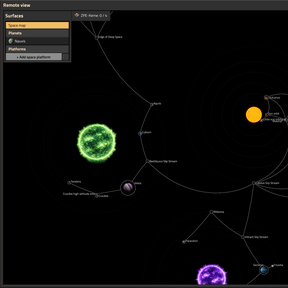
Razi Protocol is a progression and starmap overhaul for giant Factorio: Space Age + Krastorio 2 Spaced Out planet packs. It is built to turn a huge stack of planets, science packs, enemy mods, and endgame add-ons into one clean multi-system campaign.
Instead of leaving every mod on its own disconnected branch, Razi Protocol:
- Rebuilds the galaxy into progression chapters: Calidus, Solaris, Nyxaris, Vibrant, Beetlejuice, and Deep Space.
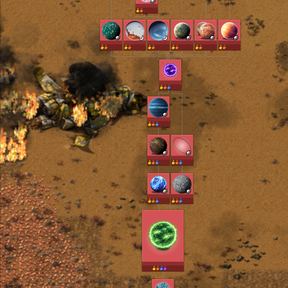
- Adds system discovery technologies and system milestone cards.
- Rehomes many planets so the starmap and tech tree follow one readable route.
- Integrates Eneas, Linox, Muria, and Shchierbin into that route instead of leaving them as awkward side content.
- Replaces Nexus omega-science clutter with a cleaner Deep Space card-driven endgame.
- Pushes the Krastorio intergalactic transceiver into a longer singularity-based finale.
- Routes optional custom enemy factions onto planets that actually fit their theme.
- Cleans up Science Tab groupings, overloaded crafting tabs, and several late compatibility seams.
Chapter Flow
Calidus
The early inner-system foundation. This is where Muluna, optional Cerys, and Eneas sit, and where the campaign starts building toward Calidus Tech Card.
Solaris
The first major custom-system chapter. It connects Castra Prime, Arig, Hyarion, Tellus, and Corrundum into a single structured progression region.
Nyxaris
The mid-tier science chapter that also absorbs Dea Dia-style progression. Apia Carnova, Moshine, Panglia, and Pelagos all feed into this stage.
Vibrant
The exotic science chapter. Ribbonia, Paracelsin, Muria, Aquilo, Rubia, Maraxsis, and Shchierbin all live here. Muria and Shchierbin are integrated directly into this route instead of being left on vanilla-style offshoots.
Beetlejuice
The harsh outer-system chapter. Cubium, Tenebris, Crucible, Vesta, Secretas, Frozeta, and the road to the solar-system edge live here. Linox now also sits in this later chapter as a Cubium-side branch.
Deep Space
The final chapter. Nexus, the black-hole chain, Oort Cloud, Sol, optional Void Processing, antimatter, promethium, and the transceiver finale all converge here.
System Cards
Razi Protocol uses system cards to keep late research readable.
Instead of requiring giant walls of individual science packs on every late technology, the mod compresses chapter mastery into:
- Calidus Tech Card
- Solaris Tech Card
- Nyxaris Tech Card
- Vibrant Tech Card
- Beetlejuice Tech Card
- Deep Space Tech Card
That preserves the scale of the pack without turning the technology screen into a mess.
Planet Integrations
Several supported planets are deliberately placed inside the campaign structure:
- Eneas stays in the early Calidus phase.
- Muria becomes part of the Vibrant route ahead of Aquilo.
- Shchierbin now branches from Paracelsin.
- Linox is moved into Beetlejuice instead of hanging off Vulcanus or Solaris.
These placements are reflected in both the starmap and the related discovery progression.
Endgame
Razi Protocol provides its own late-game shape.
Nexus omega sciences are hidden behind a cleaner Deep Space card route. The solar-system edge becomes the bridge into the final chapter. The transceiver is moved later and wrapped in a singularity research chain:
- Intergalactic Singularity Theory
- Intergalactic Singularity Test Fire
- Stable Intergalactic Singularity
- Intergalactic Signal Lock
Optional Void Processing is supported as a Deep Space branch rather than forced as mandatory core progression.
Enemy Routing
Supported optional enemy mods can be reassigned to planets that fit their identity, with vanilla biter/worm autoplace suppressed where needed so the custom faction actually defines the planet.
The razi-enable-enemy-routing startup setting can disable this behavior if you want the source mods' original enemy placement instead.
Crafting and UI Cleanup
Razi Protocol also includes quality-of-life cleanup for large modpacks:
- A
Vehicles & Infrastructurecrafting tab - Science Tab grouping for system cards and planet research items
- Narrow balance cleanup for overlapping unlocks
- Compatibility fixes for K2SO tweak/enhancement layers and several prototype edge cases
Dependency Philosophy
Razi Protocol is designed for a large dependency stack and expects a big campaign-style setup. Some content is core to the intended route, while other branches remain optional and are treated that way in info.json.
If you want the intended experience, use the dependency list in info.json as the source of truth and be careful with additional collision-layer-heavy mods.
Support
- Discord: https://discord.gg/fTEtu64whV
- Patreon: https://www.patreon.com/cw/Raziphel
- Foundry community: https://discord.gg/Dn5p7GZpKu
Credits
Razi Protocol depends on the wider Factorio modding community. Planet content, enemies, mechanics, art, and audio remain the work of their original authors and contributors.
Please see Credits.txt for the full acknowledgement list.