
GodLike Technology
Personal augmentation
Research permanent improvements to crafting speed, inventory size, manual mining,
walking speed and building/interaction reach. Five branches start with inexpensive
red science upgrades and grow through planetary specializations to expensive
repeatable endgame research. No new materials or equipment are required. Vanilla
uses base-game science packs throughout.
Startup settings control research availability and strength, with separate mining
and item-drop reach toggles. Map settings offer optional instant bonuses; defaults
grant no free bonuses.
Replacing Quality of Life Research? Install GodLike Technology 0.7.0 and disable
QoL Research together, before loading your save. Applied bonuses transfer and
covered finite upgrades are credited. New research increases the greater of the
imported or researched bonus, avoiding duplicate bonuses. Keeping both mods
enabled pauses GodLike augmentation. Keep a backup: the original records must
still be present in the save for import.
Deploy increasingly powerful exploration technology as your factory grows:
powered teleportation pads, robot battery research, upgraded robots and faster
charging roboports, directional energy shields, mobile construction rovers, heavy-lift rockets and industrial powers using
ordinary electricity, steam and existing resources. Works with Factorio 2.1.23, with additional planetary upgrades
when Space Age is enabled.
Try it immediately
Install and enable GodLike Technology, restart Factorio, then choose New game
→ Scenarios → GodLike Technology playground. This creates a separate sandbox
with all research unlocked, charged pads on Nauvis and Fulgora, upgraded robots,
shielded walls and an equipped construction rover southwest of Home. With Space
Age, a stocked 8-tonne silo waits to the east, configured for the Shield laboratory
space platform. Without Space Age, the playground has local pads and ground shields.
Click a pad to open its destination menu. Stand within five tiles of the source
pad and choose Teleport. Your entire inventory, armor, installed equipment,
ammunition, blueprints and item quality travel with you. Rename pads in the menu
to make larger networks easier to navigate.
Handheld weapons
Craft an induction harness, install it in your armor and charge it using a
suit generator or an induction tower. Craft the desired weapon. Open Electrical
arsenal with Alt+W, its shortcut, or the button in Alt+G. Choose Hold
to move a carried weapon into your cursor. These reusable tools are aimed from
the cursor, rather than installed in the ordinary ammunition-fed gun slots.
Laser lance: click within three tiles of a hostile target to begin charging.
Keep the lance selected; after two seconds it fires automatically. Press R
to release early after at least half a second. Clear the cursor to cancel.
Charging consumes 6 MW from the suit: a full shot spends 12 MJ and deals
2400 base laser damage. Damage scales with actual paid charge. Range is
48 tiles, followed by 1.5 seconds of recovery. Target movement beyond the aim
point or range can waste a charged shot. Cancelling does not refund energy
already drawn. A rejected initial target consumes nothing.
Stormcaster: click within three tiles of a hostile to discharge branching
lightning. 8 MJ strikes up to eight connected targets for 240 base electric
damage each. The first target must be within 36 tiles; later targets connect
through jumps no longer than ten tiles. Each enemy is struck once, with at most
two new branches per node. Disconnected enemies are unaffected. Native stun is
applied to units and spider units; structures receive damage without an invalid
sticker application. Recovery is 1.5 seconds.
Storm amplification raises the limit to sixteen targets, hop length to twelve
tiles and damage to 360, while raising the cost to 16 MJ per discharge.
Handheld weapons require your physical character, a carried weapon and a harness.
Leave vehicles and remote view before using them. They share weapon recovery and
the same batteries that power shields, movement and teleportation. Ordinary
laser damage research applies to the lance; Space Age's Tesla damage category
applies to the stormcaster. Native enemy resistances still apply. For example,
behemoth worms resist most laser damage and demolishers are laser-immune.
Siege laser
The 4x4 siege laser is an automated electric defense with a 250 MJ buffer,
30 MW input and 250 kW idle draw. Click it to arm/disarm or inspect charge
and firing state. It targets hostile creatures, nests and turrets within 64 tiles;
on space platforms, asteroids are eligible too.
The emitter spends 50 MJ on a visible two-second warmup, then fires for up to
three seconds. Every quarter second costs 6 MJ and deals 300 base laser
damage: 24 MW and 1200 damage/second while firing. A complete burst costs
122 MJ including warmup, before native idle drain. It then recovers for three
seconds. Dead or escaped targets can be replaced during the burst. A depleted
buffer ends the burst; disabled, frozen or deconstructing machines cannot fire.
Disarming also stops firing. Residual native buffer energy can still be used
after disconnecting external electricity.
Laser research applies, as do resistances. Large asteroids and certain enemies
remain poor laser targets; the weapon does not bypass their immunity.
Orbital weapons (Space Age)
Build an orbital lance on a space platform, connect it to the platform's power
network and stop above the target planet. There is no ground power substitution:
the emitter must be charged in space. Its item weighs one tonne, so a normal
rocket can launch one. The machine occupies 5x5 tiles.
- Orbital lance: 20 GJ buffer, 100 MW input, 1 MW idle draw. A strike costs
10 GJ and deals 12000 base laser damage within ten tiles. - Orbital storm array: 60 GJ buffer, 300 MW input, 1 MW idle draw. Supports
the same single strike, or 30 GJ for five strikes in a cross formation,
with the outer centers twelve tiles from the selected point.
Craft and hold an orbital designator. Drag a rectangle on charted planetary
ground: its center is the aim point. Shift-drag requests a storm after quantum
research. The selected rectangle does not change the damage radius. The best
charged, armed, ready emitter belonging to your force and stopped above that
planet is selected automatically. The designator also supports remote view.
Charge is deducted when a valid order is committed. Warning circles appear for
three game seconds, then the strike lands. Storm pulses follow at half-second
intervals. Each emitter has a fifteen-second firing cooldown and accepts only one
pending order at a time. Extra generation and emitters increase sustained fire.
At 100 MW, replenishing a 10 GJ shot takes about 100 seconds before idle losses.
The platform must remain above that planet until impact. Departing, destroying,
disabling, freezing, deconstructing, transferring or disarming the emitter aborts
pending impacts. Committed energy is not refunded. A job is rechecked before
every storm pulse, so departure also stops the remaining salvo.
Only hostile creatures, nests and turrets take damage. Friendships and cease-fires
are respected; friendly factories, characters, resources, trees and terrain are
untouched. All strike centers must be generated and charted. Laser resistance and
laser damage research apply. An empty designated location still spends charge.
Research progression
| Technology | Follows | Science cost |
|---|---|---|
| Personal laser weapons | Induction weapons + yellow science | 1200 red, green, blue, military, yellow |
| Siege lasers | Personal lasers + purple science | 2000 red, green, blue, military, purple, yellow |
| Stormcaster | Fulgora induction + Tesla weapons | 1500 red, green, blue, military, yellow, space, electromagnetic |
| Storm amplification | Stormcaster | 2500 of the same packs |
| Orbital bombardment | Siege lasers + Fulgora induction + metallurgic science | 3000 red, green, blue, military, purple, yellow, space, metallurgic, electromagnetic |
| Orbital storm array | Orbital bombardment + quantum mastery | 5000 of the preceding packs plus agricultural and cryogenic |
Without Space Age, the stormcaster follows induction weapons and yellow science
for 1500 packs; amplification follows the stormcaster and quantum mastery for
2500 including space science. Orbital items, recipes and research are omitted.
Every recipe uses existing Factorio ingredients.
Start using the equipment
Research Personal induction, craft an induction harness and install it in
your armor. It is a real 100 MJ battery occupying 2x3 cells. Craft and carry a
gravitic gauntlet. Open GodLike powers with Alt+G or its shortcut,
select an unlocked mode, then aim and click. The tool is reusable. Failed actions
do not consume charge. Actions share a cooldown, and require your physical
character outside a vehicle and remote view.
An induction tower transfers its own electrical energy into suit batteries
within 48 tiles, with one 4 MW budget shared by nearby players. Connect it to your
power network. Its buffer holds 200 MJ. It never creates free electricity. A
normal suit generator can also charge the harness, and ordinary suit equipment
uses its stored electricity through the native equipment grid.
Fulgora's Electromagnetic induction research unlocks a 500 MJ harness in a
2x4 shape and a 96-tile, 20 MW tower with a 1 GJ buffer. Both harness tiers work
with either tower. More players share the tower's power rather than multiplying
it. Deconstructed, script-disabled or frozen towers do not charge suits.
The servo exoskeleton uses the normal powered movement system: 45% movement
bonus, 400 kW consumption, 2x3 equipment cells. Additional exoskeletons follow
Factorio's usual stacking rules.
Gauntlet modes
| Mode | Research | Cost | Target range | Cooldown | Effect |
|---|---|---|---|---|---|
| Salvage | Personal induction | 0.5 MJ | 20 tiles | 1 s | Collect dropped stacks within 6 tiles of the target, retaining quality and item data. |
| Blink | Gravity control | 2 MJ | 18 tiles | 2 s | Jump to clear, generated ground, preserving the character and inventories. |
| Repulsion | Gravity control | 5 MJ | 24 tiles | 3 s | Push and stun hostiles within 8 tiles of the target. |
| Arc strike | Induction weapons | 3 MJ | 28 tiles | 1 s | Deal 120 electric damage to up to five hostiles within 8 tiles of the target. |
| Excavation | Matter conversion | 20 MJ | 24 tiles | 3 s | Mine neutral trees and rocks within 5 tiles into your inventory. Cliffs still require their research and one cliff explosive each. |
| Singularity | Quantum mastery | 100 MJ | 40 tiles | 10 s | Pull and stun hostiles within 12 tiles and deal 800 electric damage. |
Hostile-only effects respect force friendships and cease-fires. Damage is subject
to native resistances. Full inventories leave uncollected items on the ground;
excavation cannot mine a whole tree or rock if its output will not fit. Blink
cannot land inside buildings, water or ungenerated map chunks. It can jump over
an obstacle to clear ground on the other side.
Portable portals
After Portable portals, the powers window lists your force's existing pads.
Travel from your suit to a charged destination without constructing a source pad
where you stand. All character inventory, equipment, blueprints and quality travel
with you through native teleportation.
The suit pays the same configured source cost as a normal pad: by default 50 MJ
locally or 500 MJ between surfaces. The destination independently pays the
same amount. Interplanetary research is still required, and quantum teleportation
research reduces both costs and cooldown to one quarter. Pad and portable jumps
share a cooldown. Vehicles and space platforms remain excluded.
This gives you a way home from an expedition, while destination infrastructure,
stored power and planetary research still matter.
Steam pressure defense
Pressure engineering costs 150 red and green science after steel processing,
engines and military 2. The steam pressure repulsor is a native pipe-connected
500-unit tank. Supply ordinary steam from boilers or nuclear heat exchangers.
No electricity, ammunition or special fuel is required by the weapon itself.
When hostiles are within 12 tiles, it consumes 30 steam, at most once per
second, to push them back, slow them and deal 60 physical damage at 165 C.
Hotter steam scales damage up to 120. It fires only with at least 100 C steam.
The visual effect uses native animated steam; smoke is not baked into its sprite.
Friendly players, creatures and buildings are excluded. Pressure defense is not
available in vacuum, while frozen, disabled or marked for deconstruction.
Steam storage buffers attacks; sustained combat competes with steam generation
for boiler fuel and water. The repulsor is close-range crowd control, so walls
and other weapons remain useful against ranged enemies and large attacks.
Induction rifle
Induction weapons costs 700 red, green, blue and military packs. The rifle uses
ordinary weapon slots, aiming and ammunition handling. Range is 28 tiles;
cooldown is 15 ticks; each shot deals 60 electric damage before resistances.
The electrical beam is visual, and a native instant hit delivers the damage once.
A capacitor magazine provides ten shots. Craft it from two existing batteries,
five copper plates and one steel plate. It is finished ammunition and is not
needed by other recipes. The rifle does not draw from suit batteries; the
gauntlet's arc mode provides that alternative.
Matter conversion
Matter conversion costs 1500 red, green, blue, purple and yellow packs after
gravity control, production science and nuclear power. The converter is a native
assembling machine consuming 12 MW while working, with 100 kW idle drain.
Choose a recipe and supply it with ordinary belts, inserters or logistics.
| Inputs | Outputs | Base crafting time | Nominal crafting energy |
|---|---|---|---|
| 20 stone | 4 iron ore | 10 s | 120 MJ |
| 20 stone | 4 copper ore | 10 s | 120 MJ |
| 40 stone | 4 coal | 10 s | 120 MJ |
| 100 stone | 2 uranium ore | 10 s | 120 MJ |
| 100 stone + 2 processing units | 2 tungsten ore, holmium ore or lithium plates | 60 s | 720 MJ |
Each planetary output has its own recipe, unlocked only by Quantum mastery.
That technology follows quantum processors, electromagnetic induction, matter
conversion, metallurgic and agricultural science, and costs 4000 packs including
the planetary sciences. The vanilla alternative follows space science and the
advanced industrial branches, unlocking singularity without planetary recipes.
Speed and efficiency modules work; productivity and quality bonuses do not. The
listed energy is before idle drain, beacons, efficiency and speed effects.
Conversions intentionally trade large energy and material inputs for flexibility.
Teleportation progression
- Local teleportation: after nuclear power, yellow science, construction
robotics and concrete. Research costs 600 red, green, blue and yellow packs. - Interplanetary teleportation: after Fulgora's electromagnetic science.
Research costs 1500 red, green, blue, yellow, space and electromagnetic packs.
You must establish a destination pad on each planet first. - Quantum teleportation: after Aquilo's quantum processors. Reduces jump
energy and cooldown to one quarter.
Pads store 1 GJ and charge at up to 10 MW. Local jumps consume 50 MJ at each
endpoint; interplanetary jumps consume 500 MJ at each endpoint. Both pads
must belong to your force and have sufficient stored energy. The default personal
cooldown is five seconds. Energy costs and cooldown are configurable in mod
settings. Leave vehicles before travelling. Pads cannot be built on space
platforms.
Robot progression
- Battery research begins after construction and logistic robotics. The first
two levels each add 100% of base battery capacity to your existing fleet. - Yellow science unlocks Mk2 construction and logistic robots, with 35% more
speed, twice the base battery and a base payload of two items. Mk2 roboports
have eight 1.5 MW chargers. - Fulgora unlocks Mk3 robots, manufactured using holmium and supercapacitors.
They have 80% more speed, six times the base battery and a base payload of four
items. Mk3 roboports have twelve 3 MW chargers. - Gleba provides additional fleet speed research, Vulcanus additional cargo
research, and Aquilo repeatable battery research.
Vanilla speed/cargo research and item quality stack with these improvements.
Construction robots retain the game's normal construction-job behaviour; larger
payloads do not make one robot build multiple ghosts per trip.
Mobile construction rovers
Research Mobile construction after tanks, construction robotics and personal
roboports: 400 red, green and blue science packs. It unlocks a tracked vehicle
with 160 trunk slots and a 10x8 equipment grid, a rover construction dock and
a fuel generator. The rover has no weapons and supports normal remote driving.
Install a rover dock and rover fuel generator in its equipment grid. Load
chemical fuel in the vehicle's fuel inventory, then put construction robots,
repair packs and building materials in the trunk. The generator takes fuel from
the vehicle and produces real electricity. Place your blueprints yourself;
ordinary construction robots build them from the trunk. Crafting the vehicle
does not grant equipment, robots or supplies.
The first dock supports 100 robots, 30-tile construction range and four 750 kW
chargers; the generator produces 2 MW. Extra batteries help with bursts of
charging. The vehicle also accepts normal armor equipment. Rover docks and fuel
generators are vehicle-only and cannot be installed in personal armor.
Advanced mobile construction, after advanced robotics, costs 1000 red, green,
blue and yellow packs. The Mk2 rover has 320 trunk slots and a 14x10 grid. Its
dock supports 200 robots, 45-tile range and eight 1.5 MW chargers; its generator
produces 6 MW. Both docks work in either rover. A Mk2 rover is crafted from a
new tank, so crafting it does not consume your equipped first rover.
Heavy-lift expeditions (Space Age)
Build a dedicated heavy-lift silo and put a heavy-lift loading depot within
12 tiles of its centre. The nearest friendly depot supplies that silo. It is an
80-slot requester chest: configure normal logistics requests or feed it with
inserters. Supply rocket-part ingredients separately and choose the rocket-part
recipe in the silo's native production window.
Click the silo for Heavy-lift launch controls. Choose a friendly platform
parked above that planet, then Launch cargo. Large depot stocks are split
into batches within the weight limit; leftovers stay in the depot. Send cargo
automatically when at least 90% full repeatedly sends to the selected platform.
Leave it off for partial loads or manually prepared expeditions. Native one-tonne
controls remain available; use the additional controls and depot for heavy loads.
| Rocket | Unlock follows | Payload | Rocket parts per launch | Research packs |
|---|---|---|---|---|
| Heavy-lift | Space science, yellow science and logistic system | 2 t | 100 | 1000 |
| Reinforced | Vulcanus metallurgic science | 4 t | 250 | 1500 |
| Expedition | Gleba carbon fibre and Fulgora electromagnetic science | 8 t | 600 | 2500 |
| Quantum | Aquilo quantum processors | 16 t | 1500 | 4000 |
Each tier uses earlier science packs and adds its planetary packs. Larger rockets
consume more launch materials and fuel. Productivity still works. Ordinary
rocket lift weight remains unchanged. Native cargo-pod storage expands to 200
slots for mixed heavy loads; this does not increase ordinary rocket weight capacity.
Crewed heavy-lift expeditions follows the 8-tonne tier and costs 1500 red,
green, blue, yellow, space, metallurgic, electromagnetic and agricultural packs.
On an 8- or 16-tonne silo, stand within 12 tiles and choose Board with inventory
and cargo. Inventory, armor, equipment, ammunition, blueprints, cursor item and
quality travel with you. Their item weights plus a 100 kg passenger allowance
share the payload limit with depot cargo. An overloaded passenger cannot board;
remaining capacity is filled from the depot. Leave vehicles first. Rockets go
to orbiting platforms; use those platforms to travel between planets.
Cargo uses native pods, landing, hub storage and cargo bays. A full hub holds
arriving cargo until space is available. Add cargo bays and consume or export
stock normally; heavy-lift does not provide unlimited platform storage.
Projected shields
Place a projector behind a wall, connect electricity and rotate it with R.
Its curved field extends four to five tiles ahead of the device, covering a wall
about two tiles in front of it. Click the building for strength, stored energy
and on/off controls. Fields protect attacks that cross the arc; enemies can
approach from behind or go around its ends. Players and vehicles pass freely
through an active field without opening it or interrupting protection. Creatures
collide with the arc and can attack it until it collapses. Ordinary walls and
terrain still obstruct movement normally. Your weapons can fire through the field.
| Projector | Research follows | Strength | Recharge/s | Buffer / input | Energy per absorbed point |
|---|---|---|---|---|---|
| Ground | Personal energy shields, lasers, military science | 3,000 | 150 | 50 MJ / 5 MW | 5 kJ |
| Orbital | Space and yellow science | 25,000 | 1,000 | 500 MJ / 20 MW | 10 kJ |
| Electromagnetic | Fulgora electromagnetic science | 100,000 | 3,000 | 2 GJ / 60 MW | 8 kJ |
| Quantum | Aquilo quantum processors | 400,000 | 10,000 | 5 GJ / 120 MW | 5 kJ |
Orbital and higher tiers work on planets and platforms. Their fields extend into
empty space and destroy absorbed asteroids, consuming strength according to
their remaining health and native impact coefficient. Overwhelming impacts collapse the field and continue toward
the hull. Keep turrets for threats beyond your shield's capacity. The ground tier
cannot operate in vacuum.
Recharging strength also consumes electricity at the listed cost. Recharge pauses
for one second after a hit. A depleted field or loss of stored power causes
collapse; reactivation requires a five-second recovery delay, electricity and at
least 30% strength. Disabling the field removes its barrier. Projector hardware
remains destructible. Higher quality adds 30% base strength per quality level;
repeatable Aquilo research adds 20% base capacity per level, stacking with quality.
Fulgora and Aquilo tiers also cover wider arcs.
Compatibility and art
Can be added to existing saves. GodLikeStart is optional; its robot speed
settings are inherited by the manufactured robot tiers. This mod does not grant
starter equipment or automatically unlock research in normal games. Space Age
recipes and research are omitted without the expansion.
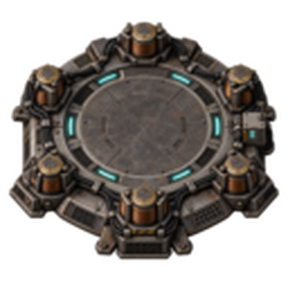
The teleporter uses original generated industrial artwork, a looping 16-frame
energy effect and a brief activation flash. Robot and roboport tiers reuse the
game's installed animations with blue and violet tints. Shield projectors use
original generated device sprites and animated fields with four separate views
for Factorio's 2.5D perspective.
The new equipment has original generated industrial sprites, icons and technology
art. Native electric beams, steam, movement and machine animations supply the
effects.
Version 0.7.0 is an early playtest release. Compatibility, inventory-preserving
travel, research effects and save/reload have been checked in Factorio 2.1.23.
The new industrial powers were checked headlessly; GUI input, in-game sprite
appearance and multiplayer end-to-end play still require manual playtesting. Recipes, energy costs and
animation can be refined after playtesting.
Licensed under GNU GPLv3. Lua source and the license are included in the mod ZIP.
Open Alt+W for the electrical arsenal. The supplied playground includes a
separate weapons range, initially disarmed siege defense and charged orbital
emitters. Positive player map selection remains a manual playtest item.